maxorigins.com

Blue Violet

Uncategorized

Uncategorized

Announcing the Kymeta Kestrel u5 National Security: The Most Compact Multi-Orbit Performance for Mission-Critical Operations

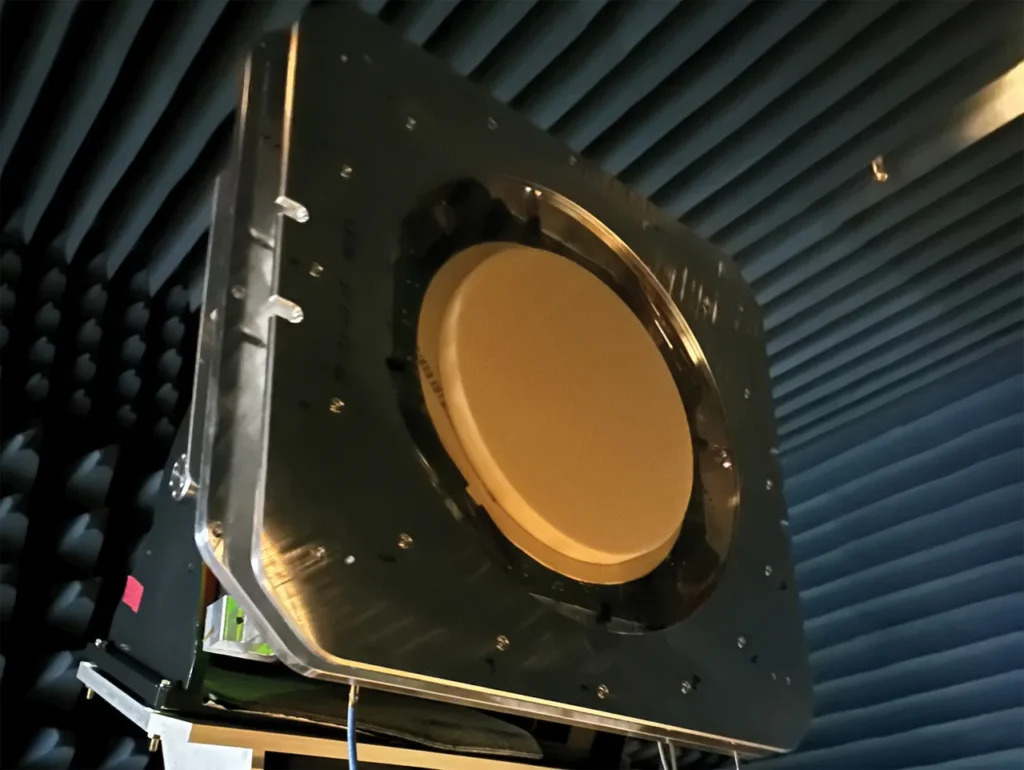
Redmond, WA – March 24, 2026 – Kymeta Corporation, the world-leading flat-panel satellite terminal manufacturer, today announces its new Kestrel™ u5 – the smallest and most capable multi-orbit SATCOM terminal to the unmanned systems and national security sectors.   The Kestrel u5 provides a new and reliable way for modern warfighters and government teams to stay connected and adapt to multiple mission profiles, offering seamless connectivity (switching between beams in under 1 millisecond) across networks, constellations, and LEO, GEO, HEO, and Elliptical orbits. Designed to keep pace with the rapidly evolving technological landscape, this rugged terminal offers future-ready capabilities, including full-duplex functionality and support for remote upgrades.   Purpose-built for operations across land and sea, the Kestrel u5 offers a comprehensive solution for unmanned systems and other platforms. The terminal’s lightweight, low-profile and rugged design have been engineered to match the intense demands of modern warfare, where factors like constant movement, RF jamming, and shock damage continuously threaten the integrity of connectivity systems. Flexible and easy-to-install, the terminal is comprised of a no-moving-parts architecture that mounts easily to the top of unmanned sea vessels and other next-generation vehicles. Its durability-first design incorporates shock absorption and patent-pending radome technology for optimal water-shedding speed and the ability to withstand, and recover from, periods of submersion in water. With critical Low Probability of Detection/Interception features (LPD/LPI), the Kestrel u5 offers a best-in-class low thermal signature, underpinned by the terminal’s low power consumption (less than 100 W typical) and passive cooling system. To top its survivability advantage, the terminal’s use of Kymeta’s unique metamaterials-based antenna surface provides a narrow beam, reducing the risk of RF jamming or interference.   The Kestrel u5’s advanced connectivity features are encased in a durable yet highly compact and lightweight form factor (less than 11kg), freeing up valuable turret-top and hull space. Designed to adapt to modern conflict scenarios, the terminal’s slimline, easy-to-integrate form factor combines maximized uptime with flexible installation. “The evolution of modern warfare has exposed the stark need for resilient, conflict-ready connectivity solutions,” said Tom Goebelbecker, SVP of National Security Programs at Kymeta. “Conflict scenarios are more data-driven and interconnected than ever before. As a result, for modern fighters, losing access to real-time communications and accurate data can mean the difference between success and failure for critical operations.” “With the Kestrel u5, we have brought to market a connectivity solution that addresses key demands of the rapidly evolving battlefield. With our multi-network approach to LEO and GEO connectivity, this terminal takes a proactive approach to downtime, seamlessly switching across networks and enabling commanders with a redundant PACE plan. This innovative multi-orbit capability is protected by the terminal’s rugged outer layer. And this advanced connectivity and ruggedized form factor is delivered in a package with unmatched SWaP-C. All these factors combine to deliver an entirely new SATCOM capability that is set to change the game in how distributed teams connect, command, and survive.” The terminal is available for order, with production units expected to become available in the next month. Broader availability is expected following this initial release period, as Kymeta continues to scale production to meet growing customer demand.   At Satellite x GovMilSpace 2026, in Washington D.C., Kymeta and partner SES will be offering live demonstrations of the Kestrel u5 and its advanced capabilities including operation on both GEO and LEO networks.  The demonstration will take place on Tuesday, March 24, and Wednesday, March 25, on the rooftop of the Courtyard by Marriott Washington Downtown/Convention Center, marking the first public live viewing of the Kestrel u5 in action.  For further information, visit kymetacorp.com.

Uncategorized

Kymeta’s Chief Scientist Ryan Stevenson Inducted Into SSPI Hall of Fame

Redmond, WA – April 9, 2026 – Ryan Stevenson, Ph.D, founding team member and Chief Scientist at world-leading flat-panel satellite terminal manufacturer, Kymeta, has been inducted into the Class of 2026 for the Space and Satellite Professionals International (SSPI) Hall of Fame. Members of the Hall of Fame are recognized pioneers across the space and satellite industry with a record of significant achievement with lasting value.   Joining an esteemed group of industry professionals, Stevenson was recognized in the Milestone Achievement category for his role in achieving a transformative breakthrough in satellite antenna technology: the world’s first simultaneous connection to both Ku and Ka frequency bands in a single, compact antenna aperture. This breakthrough paves the way for a new era of seamless satellite connectivity, bringing satellite communications closer to the type of ubiquitous connection seen in cellular. The 24th Induction into the Hall of Fame took place at the inaugural Night of Excellence, last night (March 24, 2026), at The Howard Theatre, in Washington, DC, where Stevenson picked up his prestigious award. Ahead of the event, he took part in a mentorship session with the SSPI’s 25 under 35 cohort, which was broadcast as part of the night’s proceedings. “Being inducted into the Space and Satellite Professionals International Hall of Fame is genuinely humbling,” said Ryan Stevenson, Chief Scientist at Kymeta. “As a scientist and engineer, I’ve spent most of my career focusing on the technical challenges rather than the spotlight.” “When we began developing Kymeta’s flat-panel antenna technology, none of us were thinking about Hall of Fame moments. We were just trying to solve a really hard physics problem and commercialize it. Achieving simultaneous Ku and Ka band connectivity in a single aperture required a team willing to challenge long-held engineering assumptions and work incredibly hard to achieve the goal, and therefore this achievement truly is a recognition of the entire team.” “If this milestone means anything, it’s that we’re one step closer to making satellite connectivity seamless and ubiquitous – something our customers can rely on without even thinking about it. To be recognized by SSPI, and to join a group of people who’ve shaped this industry in such fundamental ways is an incredible honor. I’m deeply grateful.” The Kymeta ‘KuKa’ breakthrough has profound implications for the future of the industry, laying the groundwork for a “network of networks”, where satellite connectivity is seamless across orbits and frequency bands. Looking ahead, the type of pervasive connectivity unlocked by the technology will underpin national security endeavors like the Golden Dome by adding a sovereign, interconnected web of real-time communications to mesh components like ground-based radar and space-based sensors.   Douglas Hutcheson, Board of Directors and former CEO at Kymeta, added, “Ryan has been the guiding force in translating metamaterials from advanced concepts into commercially deployed, industry-leading products. His optimism, analytical rigor, and understated leadership consistently push teams beyond what they believe is possible, while ensuring credit is shared across the organization. His vision and execution have been central to breakthroughs that are shaping the future of satellite communications, and his induction into the Space and Satellite Professionals International Hall of Fame is a fitting recognition of a career defined by impact, innovation, and lasting contribution to the industry.” “The satellite and space industry sits at a fascinating inflection point, where the rapid rate of innovation is bringing new technologies to the market at an unprecedented pace,” Stevenson concludes. “Long gone are the days when space and satellite enterprises operate in closed circles. The industry is opening itself up to the world. Being recognized for an industry milestone achievement is equally important for the direction Kymeta as a company is heading in. Our KuKa breakthrough is set to revolutionize the way we use SATCOM technology – replacing stove-piped and clunky legacy systems with seamless, streamlined connectivity solutions. I am confident of the change this breakthrough will bring, and in this way, I will gladly accept my induction into the Hall of Fame with bright hopes for the future of this industry.” As a founding team member and now Chief Scientist at Kymeta, Stevenson has been instrumental in guiding the company from its initial spin-out to being an established industry player. For the past decade, he has played a central role in the development of Kymeta’s unique metamaterials-based antennas, which continue to deliver industry-leading efficiency and performance. Throughout his career, Stevenson has tirelessly worked to push space and satellite technology to a more innovative, open, and standardized future.    For more information, visit kymetacorp.com.

Uncategorized

Kymeta Wins ONR Contract to Advance Ku/Ka Multi-Band SATCOM Technology

Redmond, Washington – April 14, 2026 – Kymeta Government & Defense, the world-leading flat-panel satellite terminal manufacturer, has won a significant contract with the Office for Naval Research (ONR) to further develop its breakthrough multi-band, multi-beam antenna architecture. The three-year development contract from the ONR will enable Kymeta to mature and expedite the research of its world-first innovation – multi-band connectivity with four concurrent full-duplex beams in Ku- and Ka-band frequencies with a single antenna aperture. The technology was first successfully demonstrated in April 2025 and has since been demonstrated to multiple U.S DOD departments and agencies. ONR is interested in advancing Kymeta KuKa technology as it aligns to the goal of the Communications and Networking Program within the C5ISRT Department (ONR 31), which supports the Navy’s Information Warfare vision by developing measurable advances in technology that directly enable and enhance end-to-end connectivity and quality of service for mission-critical information exchange among widely dispersed naval, joint, and coalition forces. High performance antenna/arrays, for tactical platforms or unmanned systems with constrained size, weight, and power, are an important enabler for Distributed Maritime Operations. First KuKa Terminal Prototype for Bascom HunterThe transition from development to a full-scale prototype now also becomes a reality, as Bascom Hunter, a leader in the design, development, and manufacture of advanced electronics in resilient communications, signal processing, artificial intelligence (AI), and signal intelligence in aerospace and defense applications, has provided Kymeta with a purchase order for the first terminal prototype with the KuKa technology. The agreement with Bascom Hunter will see Kymeta deliver the FIRST single-antenna, multi-band, multi-orbit SATCOM terminal for testing and evaluation, starting in Q2 2026 as part of its existing relationship with the U.S. Navy. Kymeta’s terminal, named in development as the ‘Kymeta KuKa 8 Series’, is a next-generation electronically steered user terminal with the highest capability density of any satcom antenna ever designed. It enables simultaneous operation across both Ku and Ka frequency bands within a single, compact, low-profile flat-panel antenna. It will enable pathway diversity across proliferated LEO and hybrid architectures – integrating GEO, MEO, LEO, and HEO, plus other WAN connections simultaneously and dynamically without the size, weight, power, and complexity challenges associated with traditional multi-antenna approaches. Leveraging Kymeta’s shared aperture architecture, which uses the full antenna surface across multiple frequency bands rather than dividing the antenna into multiple panels, the new hybrid Kymeta KuKa terminal enables higher RF efficiency, narrower beamwidths, significantly lower power consumption, and a lower heat signature in a compact form factor ideal for naval vessels, unmanned autonomous systems, and other defense platforms. The prototype will be evaluated across multiple commercial and government satellite architectures to support resilient, multi-orbit, multi-band operations. Matthew Sieber, Senior Director of Programs and Strategy at Kymeta, said: “True SATCOM resilience is provided by network diversity rather than dependence on a single network. ONR recognizes the need for capabilities that allow seamless switching between networks and frequency bands, ensuring resilient and uninterrupted connectivity. This capability is essential, because being disconnected, even momentarily, is not an option. Reliable access to critical data can determine mission success or failure, enable clear real-time decision-making, and ultimately influence whether fleets return home safely.” “When we made our KuKa breakthrough last year, we knew it would have a transformational effect on military SATCOM capabilities,” Sieber continues. “I’ve had conversations with stakeholders across U.S. Defense about their requirements from satellite connectivity, and the answer is always the same: resilience through path diversity. A resilient and robust comms capability that never fails and supports responsive and agile operations while on the move. Kymeta’s new terminal will deliver on that need.” Tasked with developing multi-band, multi-orbit SATCOM solutions for this program assessment, Bascom Hunter rapidly delivers capabilities resilient to the threat by the relentless pursuit of the warfighter’s needs via a state-of-the-art multi-waveform, software defined modem and associated 3U VPX plug-in card modules. Bascom Hunter’s solution addresses key elements of increased MILSATCOM survivability through anti-jam, beyond-line-of-sight (BLOS), and multi-path communications in LEO, MEO, and GEO for the Navy. Kymeta’s KuKa 8 Series terminal enables flexible, low‑SWaP access to commercial and military Ku- and Ka‑band networks, providing a highly mobile, flat‑panel solution suited for maritime, airborne, and expeditionary platforms. When integrated with Bascom Hunter’s multi‑waveform, software‑defined modem and 3U VPX modules, the combined system delivers resilient, multi‑orbit SATCOM connectivity capable of supporting Navy operations in highly contested environments. Craig Gendron, Vice President – SATCOM at Bascom Hunter, added: “Our responsibility is to deliver resilient, mission-ready SATCOM capabilities that directly address the Navy’s operational requirements in contested environments. Kymeta KuKa technology introduces a powerful new dimension of multi-band, multi-orbit flexibility that complements our multi-waveform, software-defined modem architecture. Together, this integration enables a scalable, survivable communications solution designed to ensure connectivity for the warfighter.” These efforts cement Kymeta as the leading multi-band, multi-orbit, flat-panel terminal provider for the U.S. DOD currently deployed across the globe. This announcement builds on the momentum of being selected as the multi-orbit SATCOM provider for the U.S. Army’s Next Generation Command and Control (NGC2) Pilot in Q3 2025. Further partnerships across the Department of Defense are in motion and will be announced in due course. Following Kymeta’s KuKa world-first technological breakthrough in April 2025, this announcement represents a significant milestone in the company’s multi-band product roadmap. With established interest from national security stakeholders in the U.S. and globally, Kymeta will continue to roll out its KuKa terminals for defense use cases in 2026. The terminals will also be available for a broad range of commercial use cases, including maritime, transportation, and emergency services, among others. For more information, visit kymetacorp.com About Kymeta: Kymeta revolutionizes satellite communications through Intelligent Communications Platforms (ICPs). Founded in 2012 and headquartered in Redmond, Washington, Kymeta leverages cutting-edge metamaterial-based science to engineer, manufacture and deliver resilient connectivity and enhanced situational awareness for critical, mobile applications.  Backed by U.S. and international patents, our electronically steered flat panel antennas enable seamless communications on-the-move. With software-defined solutions, hybrid multi-network capabilities, and edge processing, we integrate satellite and cellular


Scroll to Top